Trials of Faith, Shared Resilience: Mumbai’s Low-Key Interfaith Gathering at ISKCON Hall Brings Christians, Jains, Zoroastrians, Muslims and Hindus Together Through Music, Dance and Reflection
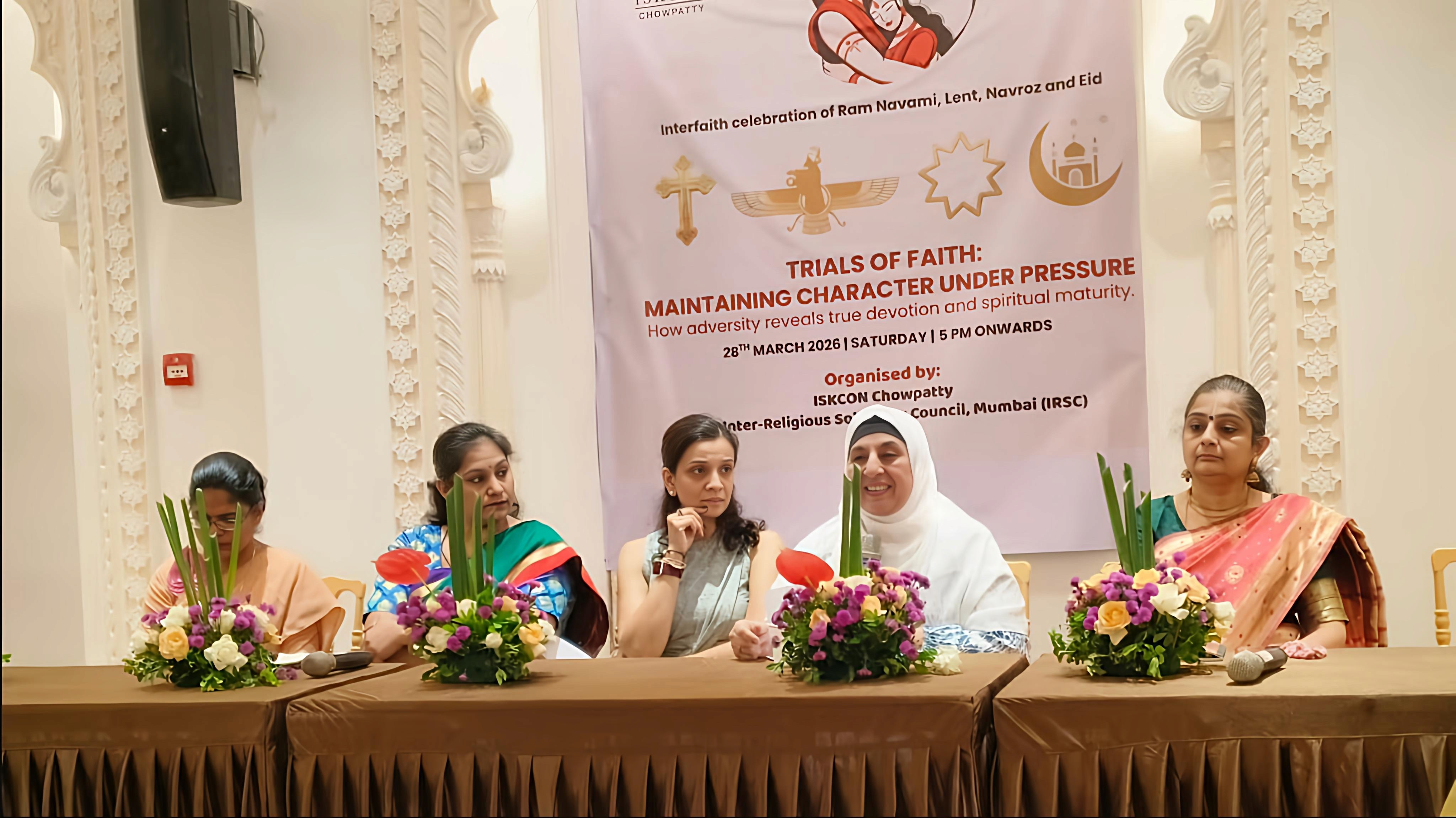
On March 28, 2026, a quiet neighbourhood hall in Mumbai became a space of gentle unity as people from six different faiths gathered not to debate beliefs, but to reflect on “Trials of Faith: Maintaining Character Under Pressure” — sharing music, dance and stories of ethical resilience and coexistence.
In the peaceful Bhaktivedanta Hall at Sri Sri Radha Gopinath Mandir, Girgaon Chowpatty, the evening unfolded without fanfare. Organised by the Inter-Religious Solidarity Council (IRSC) Mumbai in collaboration with ISKCON Chowpatty, the gathering was deliberately kept intimate — a neighbourhood coming-together timed with the overlapping festivals of Ram Navami, Lent, Navroz and Eid.
Christians, Jains, Zoroastrians, Muslims and Hindus sat side by side on simple mats and chairs. The programme opened with a short reflection by Keshav Chandra Das Prabhu of ISKCON, who spoke of spiritual resilience in uncertain times. What followed was not a series of formal speeches, but a flowing exchange: personal stories of facing pressure with integrity, interfaith prayers, and artistic expressions that needed no translation.
A group of ISKCON children performed a joyful dance celebrating Ram Navami while weaving in themes of harmony. A soft Sufi rendition rose from one corner, answered by a gentle Jain bhajan and a Zoroastrian prayer song. Between performances, participants shared simple thoughts on what it means to hold onto character when life tests us — stories of everyday courage, forgiveness and quiet strength drawn from each tradition.
There were no grand declarations or political undertones. Just neighbours, colleagues and friends from different communities choosing to spend an evening strengthening the bonds that already exist in Mumbai’s crowded yet connected streets. The focus stayed clear: ethical values and coexistence are not abstract ideals but daily practices that help communities weather any trial.
By the time the gathering ended, the hall felt lighter. People lingered over tea, exchanging numbers and planning smaller follow-up meetings. In a city that often moves too fast to pause, this low-key event offered something rare — a reminder that shared reflection and art can quietly rebuild the bridges we sometimes forget we already have.